






By
Reno Omokri
The biggest challenge to Nigeria’s progress as a nation is not corruption, tribalism, terrorism, inflation, or even the removal of fuel subsidies. It is our entitlement.
The government did not do this. The government did not do that. I wish every Nigerian could travel the world. There is nothing like government airports, hospitals, schools, or markets in these nations we want to japa to.
Governments in Europe, America, and Canada do not go into business or provide many of the services the Nigerian government provides for the Nigerian people.
Hospitals are built, owned, and operated by the private sector. Ditto for hospitals, universities, airports, power stations, transmission lines, and sometimes even roads.
59.9% of Americans pay taxes, and their tax money is mostly used to fund the government and the military. I challenge you to find one government-owned hospital in America for civilians.
Even their postal services are run by the private sector.
When you hear British Telecommunications, British Gas, British Aerospace, British Energy, and British Airways, none of them are owned by the British government.
When you hear Bank of America, American Airlines, and American Electric Power Company, these are all private companies.
Please fact-check me: If you earn €58.597 in Germany, you will pay 42% of your income or €24,610 as taxes. There will be riots if you ask Nigerians to pay this level of tax. But we want a German level of delivery from our government. So, where will the money to run Nigeria come from?
In 1960, Nigeria could afford that because our population was 45 million, and we needed to raise an educated class speedily. By 1970, we could still afford it, and we did provide it, because our population was just approaching 50 million, and we still had a shortage of qualified persons.
But this was no longer practicable by the 1990s when our population topped 120 million. And how when we are twice that, at 220 million, it would be ruinous.
Britain went through these stages, and Mrs. Thatcher was forced to end birthright citizenship, introduce council tax, and privatize every government-owned business, including giants like British Telecom, British Gas, British Energy, British Aerospace, and British Airways.
Fewer than 8% of Nigerians pay income taxes, yet we want the government to build schools, hospitals, power stations, transmission lines, railways, airports, stadiums, etc.
Then, after doing these, the government should still have money left over to subsidize fuel and power and give palliatives to Nigerians, or we will protest their alleged mismanagement and corruption.
Even insecurity stems from this issue. We need about five million soldiers and security officers to effectively secure Nigerians, but we have less than two million. We need at least three million more soldiers, policemen, airmen, etc. But when only about 6% of us pay taxes, where will the money to pay them come from?
Nigerians are the main problem of Nigeria!
You will hear them say, but we have oil.
Saudi Arabia has a population of 35 million and makes $350 billion annually from oil. That is $10,000 per citizen. Nigeria has a population of 220 million people and generates approximately $36 billion from crude annually. That is $150 per person. At 2.6 million people, Qatar is just one percent of our population. Yet, their annual revenue is $68 billion. Two and a half times that of Nigeria.
We must be more productive as a country.
Failing that, Nigeria will continue to borrow or print more money, fueling inflation and increasing commodity prices.
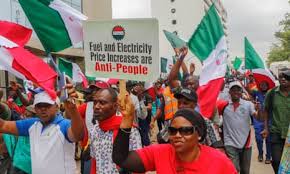
Protests and riots cannot change these economic realities. They will be just like a child’s tantrum when his parents cannot afford to buy him a toy.
Nigerians want to live at the state’s expense, forgetting that the state has to live at the expense of the people or it will collapse, as the Soviet Union did in 1991.
SUMMARY
Before protesting, we should recognize our part in Nigeria’s problems. We need to stop feeling entitled and start paying more taxes, as many services are provided by private companies in other countries. Protests won’t solve these issues; we need to work together for real change.







Add Comment