










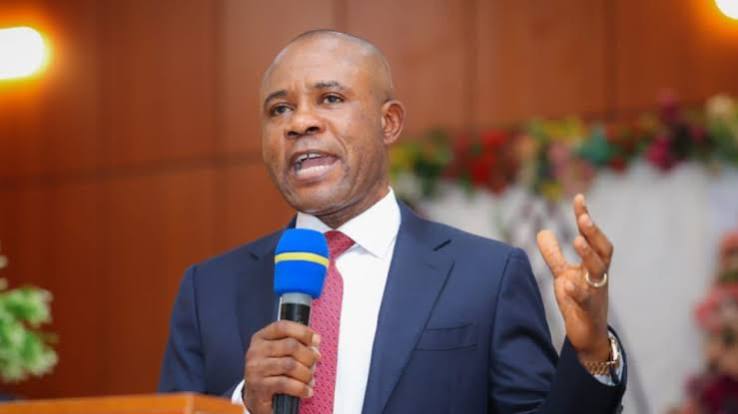

Enugu State has emerged as a significant focus of discussion over state-level economic development following Governor Peter Mbah’s presentation of projects that his administration says are generating revenue and supporting economic expansion.
Recent figures reported by Premium Times indicate that Enugu generated ₦130.62 billion in revenue during the first three months of 2026, with Enugu Air identified as a significant contributor. The figures have increased attention on the state’s attempt to broaden its internally generated revenue base.
The administration has placed emphasis on infrastructure, aviation, healthcare, security, agriculture, tourism and urban development. Reports from an inspection involving editors also highlighted projects including a new city, livestock development facilities, roads, schools, hospitals and security infrastructure.
The state’s strategy is significant because Nigerian states are increasingly being encouraged to reduce dependence on federal allocations and strengthen internally generated revenue. The ability to create productive assets that can generate sustainable revenue is consequently becoming a central issue in state economic planning.
Governor Mbah has argued that the state’s revenue expansion is occurring without taxation accounting for the overwhelming majority of the state’s income. His administration has linked the growth to economic activity and investments across different sectors.
However, revenue growth must ultimately be assessed alongside expenditure, debt sustainability, employment creation and improvements in citizens’ living standards. Higher internally generated revenue is significant, but its developmental value depends on how effectively resources are converted into public services and productive infrastructure.
The Enugu experience therefore forms part of a wider national conversation about state-level economic transformation. As federal and state governments face increasing demands for infrastructure and social services, states capable of expanding their productive economies and revenue bases could play a greater role in Nigeria’s overall development.






Add Comment